A first cork or felt board, extra backs, and a few pins that already live on cloth. That is this kit. Orlando Pin Company makes enamel pins, souvenir-style city marks, and hat pins. They share a needle and a clutch. They do not share a wall. A cap through a park week is a moving board. A hallway cork square is a still one. The still board, plus the backs that keep a pin on a visor until it gets there.
The essay A first pin board is how a pin lives once you are home. This hub is how to kit that wall: cork or felt, rubber clutch versus locking back, and how a pin sits on a cap before it ever meets cork. The nested list is the starter-board kit.
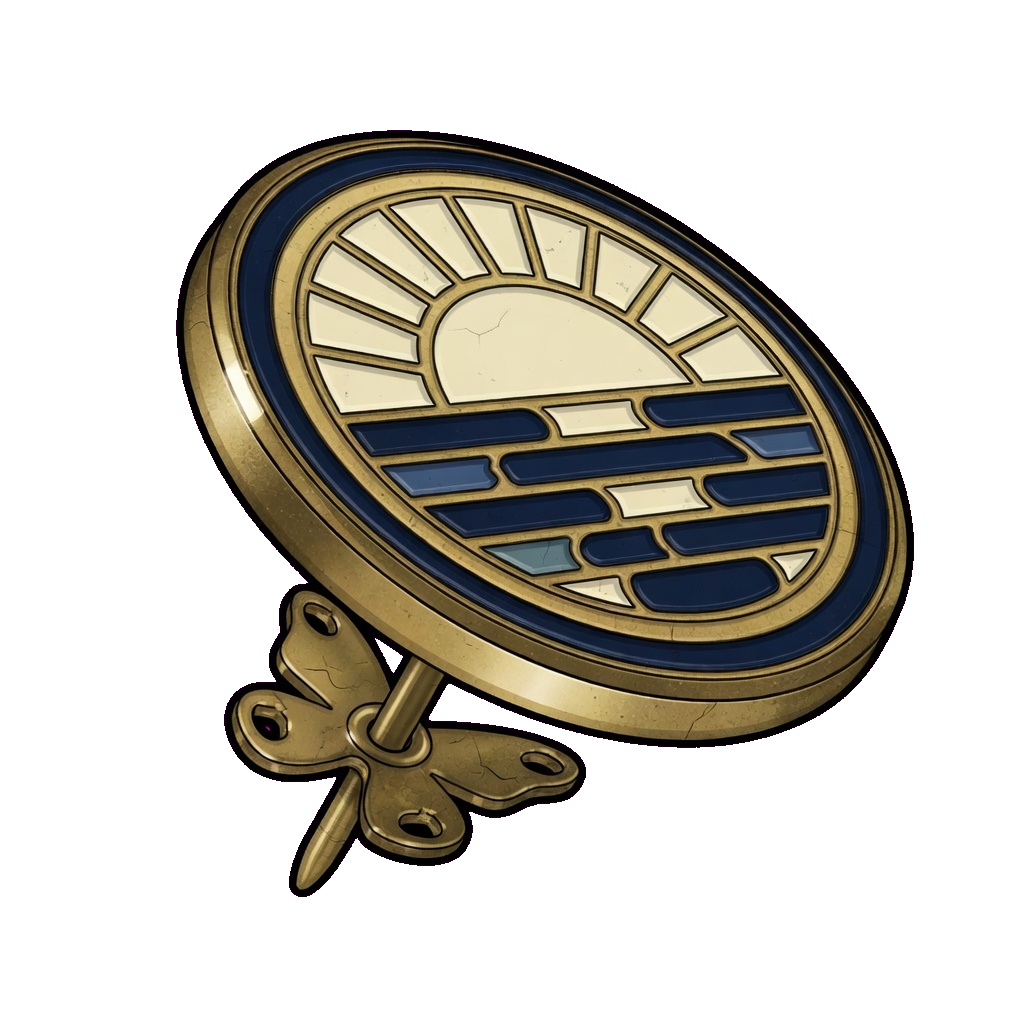
Hard enamel. Color flush with the metal line.
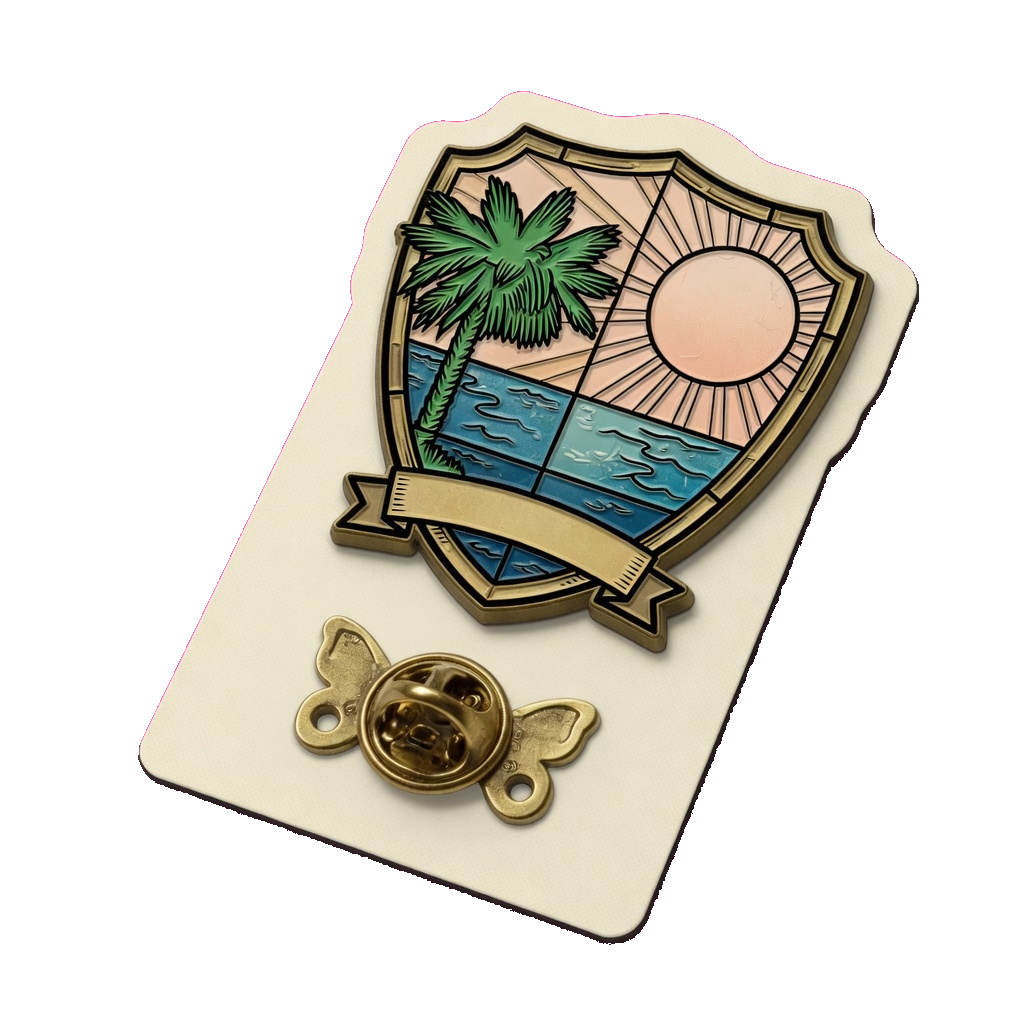
Souvenir-style. A city mark that leaves with you.
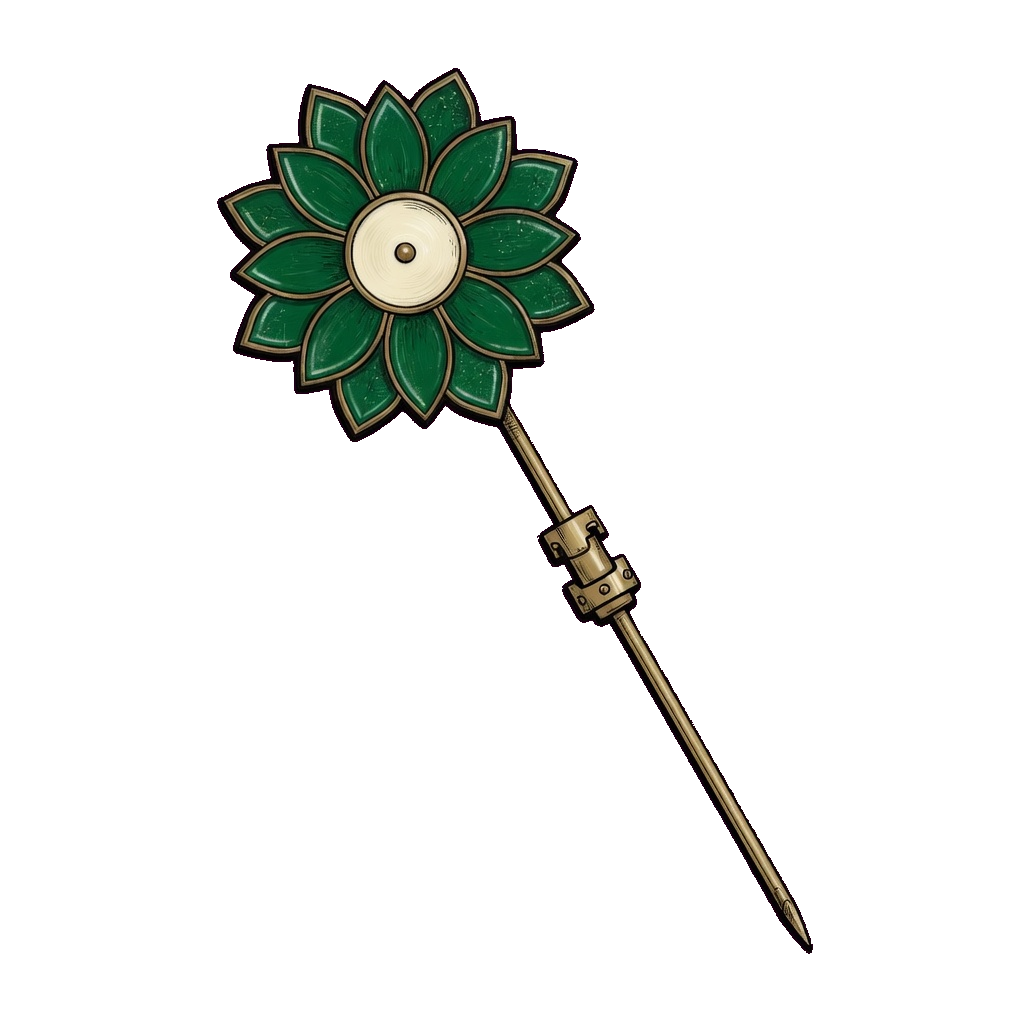
Hat pin. Needle through the crown, clutch behind.
Cork versus felt
A hat pin, not a lecture.
Cork closes behind the post. A board sold as a cork pin board is usually thick enough that the needle holds without a clutch; a thin tile still wants one seated on the back. Cork shows the holes. That is part of the pleasure if you like a board that looks used after a west-side week.
Felt is a cloth square or a banner on a frame. A felt pin display board is built for this: the needle goes through, the clutch stays on, the holes hide. Felt sags if you load a heavy run of metal along the bottom edge. Cork does not sag. Felt is kinder on a polished hard-enamel face because the cloth does not grit the way a dusty cork tile can.
A shadow box is either surface with glass in front. Useful if the pin is a gift you are not ready to wear. Glass stops fingers. It also stops you from moving the layout every week, which is half the point of a first board.
Rubber clutch versus locking back
The butterfly clutch is the classic lapel back: two metal wings you pinch. Wikipedia records it as a 1942 Ballou design, first used on U.S. military insignia, later the default on lapel pins. It is not the kindest back on a cap in Orlando heat. The wings catch a sweatband. They catch hair. They catch the fold when you stuff a hat in a bag on International Drive.
A rubber clutch is a small disc that grips the post by friction. Lapel Pins Plus treats rubber as the everyday default: no springs, no moving parts, easy on and off. Rubber stretches. After a humid afternoon on a west-side cap, a wandering pin is often a stretched disc, not a bent post. Keep spare pin backs rubber clutch in the same drawer as the board.
A locking back, deluxe clutch in the trade, takes a deliberate pull. Lapel Pins Plus lists locking backs as the most secure option and names hat pins and daily wear as the reason. On a tote from a downtown hotel to International Drive, the locking back is the one that does not bounce into a drain. Read how a clutch holds a pin for the hardware in ordinary language.
The longer note is how a hat pin sits on a cap. The short version for a kit: pierce the crown fabric, not the brim. The brim of a baseball cap is too dense; you will bend the post. Pinch a panel, go through the outer cloth, angle the post so the face sits flat. Rubber or locking, not butterfly wings against a sweatband.
When the week is over, some people leave the pin on the hat they flew home in. Some people move it to the board the same night so the cap can go in the wash. The kit assumes you will do both: wear it, then park it.
Gear to try
As an Amazon Associate we earn from qualifying purchases.
These searches are gear to try around a first board, not a stock list from Orlando Pin Company. Pins from this company are inquired through the catalog. Boards and backs are what you kit around them. Full disclosure lives on Disclosure.
Cork pin board
A small cork square or rectangle that closes behind a pin post. Thick enough to hold without a clutch, or thin enough that you still seat one.
Hard enamel is a surface: color polished flush with the metal line. A souvenir-style pin is a subject: a city line or skyline meant to travel home. They can be the same disc. They are not the same decision. Hard enamel vs souvenir-style is the side-by-side. The craft essay is how an enamel pin is made. The trip essay is taking a pin home from Orlando.
The board essay and this kit
A first pin board is the essay: cork versus cloth, hats versus jackets versus bags, packing a pin for the flight home.
The starter-board kit is the nested list: what to search, which back for which cloth, how to lay the first pins.
Name enamel, souvenir, or hat. Write sales@tabaconda.com. Publisher: Orlando Pin Company and Tabaconda LLC.
We use cookies to analyze how the site is used and, where this site shows ads, to show advertisements. Essential cookies are always on. You can accept or decline optional cookies.